
Do you ever find yourself in need of quick and easy group counseling activities? Of course, you do.
It’s easy to picture: it’s Monday morning, and you have a list of group counseling activities and plans to print, but there’s a long line at the copier. A student makes a disclosure and Child Protective Services is heading your way. A grandparent shows up at school and wants to share concerns about a student with you. Another student is crying because he misses his mom.
The thought of pushing back groups another week when students depend on these consistent meetings is anxiety-provoking, but your resources aren’t ready. Or maybe you have time to plan, but no funding to purchase curricula or group counseling activities. Without beautiful group counseling plans and resources, what will you do? Behold, 10 quick and easy group counseling activities that students will love.
#1: Group Counseling Basketball
Now, I’m not going to lie to you. This is a crowd pleaser. Be warned that students will want to play this all the time! I have a Nerf hoop in my office, but you can use a trash can, a recycling bin, or a storage basket… You get the idea. Students don’t mind because it’s so fun!
Students take turns shooting a basket. If they make it, they can celebrate with a dance or an activity you choose. If they miss, they answer a question related to group content. Questions can be as simple or as complicated as you want. For example:
- Changing Families Group: What’s one thing that's special about your family?
- Friendship Group: What’s one problem 5th graders might have in friendships?
- Grief Group: What is one thing you'd say to someone whose family member died?
As you can see, this activity is easily adaptable to any group!
#2: Stand Up, Sit Down Activity
Ok, so this name leaves a lot to be desired, but it’s a super quick, easy group counseling activity that kids enjoy. Here’s how it works: make a statement about anything (really, anything). If that statement is true for a student, she stands up. Students remain seated if it’s not true for them. If the statement is true for everyone, then everyone can stand up and have a 5-second dance party.
It’s amazing how much students will dance, even without music playing! I encourage students to keep a close watch for similarities between group members. This activity is fantastic for building group rapport and assessing student interests or family dynamics. Think about things you want to know about the group, and make a statement about it. Easy!
#3: Feelings Hot Potato Game
This is another quick and easy group activity that is effective and brings a lot of giggles! I use a musical hot potato, but again, you could use anything handy in your office as the item to pass. In a pinch, I’ve used stress balls & music from my laptop. Played like traditional hot potato games, students pass the potato around the group until the music stops. Whoever is holding the potato at that point has to share. Depending on your group topic, perhaps they share a feeling word, coping skill, family memory, etc.
#4: Feelings Walk
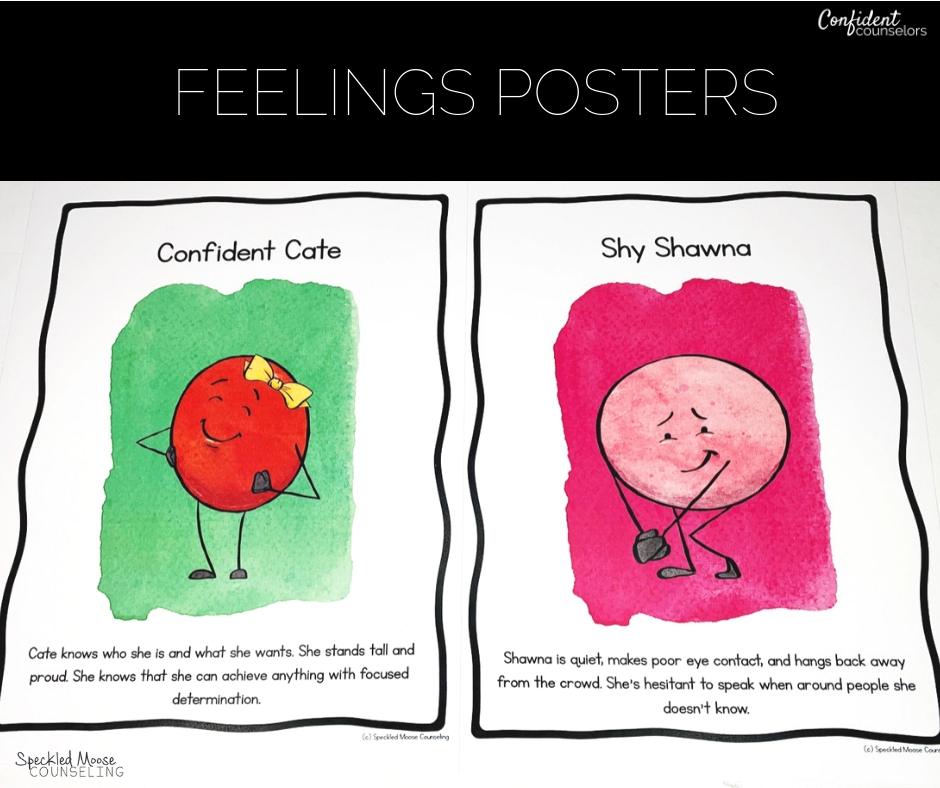
I love incorporating simple movement into my group activities, and this is an easy way to do so. This activity is similar to musical chairs but with a twist. I arrange the chairs in a circle (full disclosure: I usually just leave them as they are around my group table & have the kids push them out a little bit to make space to walk), and I tape feeling posters or words onto each chair.
If you don’t have feelings posters readily accessible, sticky notes will do the job. Students walk around the circle while music plays (again, internet-based music to the rescue), and when it stops, they sit in the closest chair. I like to “randomly” call on students to share something related to the feeling word on the chair.
Examples might include: sharing a time when they experienced that feeling, where they felt it in their body, and a coping skill they could use when experiencing that feeling. You get the idea. You could also adapt this activity by making the sticky note or poster reflect different group topics.
#5: Feelings Faces
If you can’t tell, I love doing group activities focused on identifying feelings. Similar to the Feelings Walk, I use feelings posters & tape them around my room. Again, if you don’t have feelings posters, you can write feeling words or draw quick emotion faces. I spread them out so that the students can move.
Instruct the students that they will hear a scenario, and their first job is to sit and think about how they might feel in that scenario. When they hear the magic words of “Q and Q," for quickly and quietly, they will get up and quickly and quietly move to that feeling. I emphasize that I am not saying “R and L” for running and loudly.
Students take turns sharing and explaining why they think they’d have that feeling in the scenario. Scenarios can be simple, vague, and related to different group content. Regardless of the topic, we process how even though everyone had the same “experience” (scenario), people had different feelings about it, and that’s ok. Scenario examples could include:
- Friendship or Social Skills Group: “You found out you’re not invited to a friend's birthday party.” (This one always brings up good dialogue!)
- Changing Families Group: "You overhear your mom arguing with someone on the phone."
- Self-Esteem Group: "Your classmate says that your idea is dumb."

#6: Feelings Charades
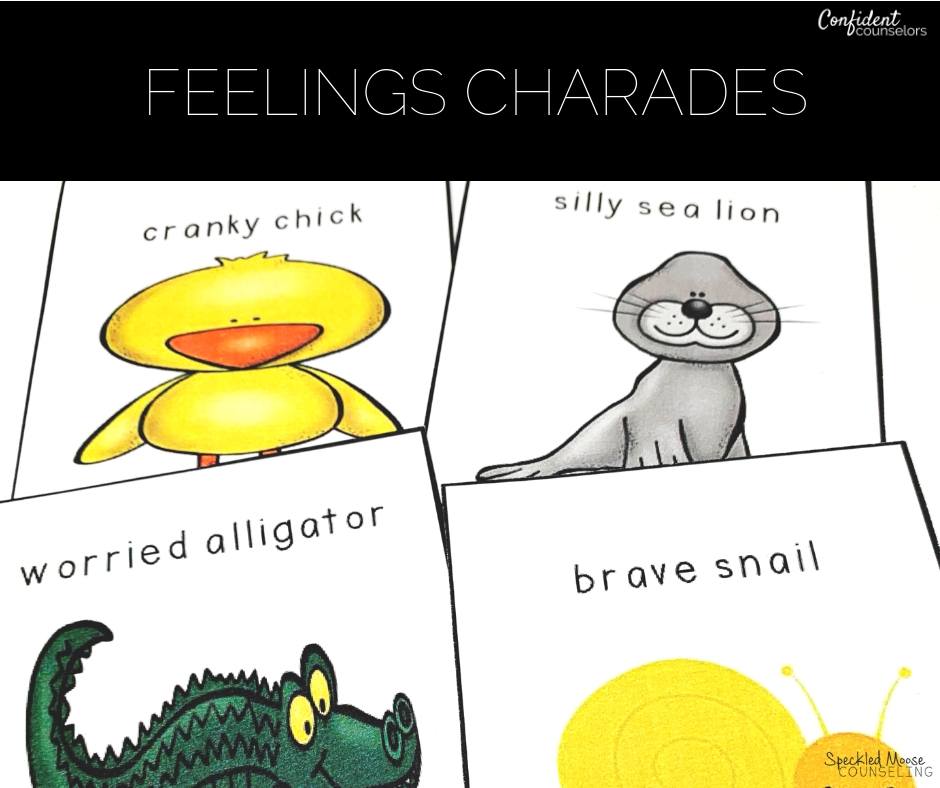
Play is good for the soul, and this easy group activity never disappoints. I have feelings charades cards on hand for students to choose, or they can be creative and come up with their own ideas. It’s a fun way to observe students act out different emotions. A lot can be learned from how they express emotions through different body movements and gestures, as well as other characterizations.
Students take turns pretending while the other students guess what they are acting out. Adapt this activity to align with other group topics by asking students to act out a family scene or a friendship problem. You can take it a step further by discussing the charade or problem after each turn and having the group generate solutions.
#7: Beach Ball Activity
This easy group activity is also a money saver. Here’s a tip: stock up on dollar beach balls when you see them in the summer and store them away for this activity. You’ll see expensive thumb balls for different topics in counseling resources catalogs, but who wants to pay for those?
Write questions or statements on the beach ball related to the group topic, and pass it around to group members. When students catch the ball, whatever activity or question the right thumb touches is the one they do. Simple! If you have storage issues and don’t want to have multiple beach balls, you could write numbers on the beach ball or simply use the ball's colors. You can jot down a list of numbered or color-coded statements.
#8: Rare Birds
This group counseling activity is a huge time saver because the only prep it requires is making sure you have paper and writing utensils in your office. Provide each student with paper and a writing utensil, and ask them to write down things or qualities that make them special or unique. Mix up all of the papers, and read the statements aloud. As a group, try to guess who that statement describes. Play up the mystery for extra laughs, e.g. “Hmmm…. could this be Gretchen?! I’m not sure if she can wiggle her ears...but maybe…” (complete with exaggerated facial expressions and tone of voice).
It’s another easy group counseling activity that allows for self-reflection, building group rapport, and assessment. This is perfect for self-esteem or friendship groups, but you can also tweak it to other group topics. For example:
- Changing Families Group: students can write about things that are unique about their families.
- New Student Group: students can write about favorite memories or events from their previous school.
#9: Deserted Island
You can't get much easier with this group counseling activity! It's a great assessment activity because it provides insight into students' values, family dynamics, and more. You might have a stockpile of paper plates in your craft bin, or you could have students cut paper circles. If you’re really pressed for time and want to keep it simple, the kids can draw a circle.
Set the scene. The students have won a trip to an island! It’s so exciting! But wait! For their trip, they can only bring _____ (one family member, 3 items, etc., you decide). Students draw in who or what they’re bringing and then share their islands with the group. The responses are always fascinating!
#10: Graffiti Wall
You could do this quick group activity a couple of ways. You could tape up large pieces of paper to the wall (there’s something really appealing about writing on the wall), or you could use an interactive board if you are lucky enough to have one in your office. Write a statement (or multiple statements) on the sheets of paper and have the students move around & write their answers. You could generate questions or answers as a group and then process the responses. Examples might include:
“One thing that makes me angry is ______.”
“What I can do to solve this problem is ______.”
"One thing I'd change about my family is _______."
A tip: if multiple students are writing answers at the same time, make a point of knowing which color marker they’re using, or monitor closely to see who writes what. Unfortunately, I’ve had some concerning statements written before, and it was a lot of work studying handwriting to determine who wrote it!
Voila! With these quick and easy group counseling activities, your counseling groups will never have to be delayed due to a lack of prep (who has prep time, anyway?), and you can eliminate the stress of not having resources by keeping these activities in your back pocket. The added bonus is that these tried-and-true group counseling activities are all loved by students!
Have a favorite quick-and-easy group counseling activity that I didn’t include?
Share it below!
Shop the Post