

Positive thinking can be the difference between a student persisting with a challenging activity and stopping too soon. As counselors, we can directly work on building a student's positive thinking and give them the skills to be resilient when faced with challenges.
Catch, Check, Challenge, & Change
I focus on two things when building a student's positive (realistic) thinking. One, emphasize that negative thinking is normal and everyone has negative thoughts. Two, we can learn a way to kick those negative thoughts to the curb.
I use a simple step-by-step CBT process.
- Catch
- Check
- Challenge
- Change
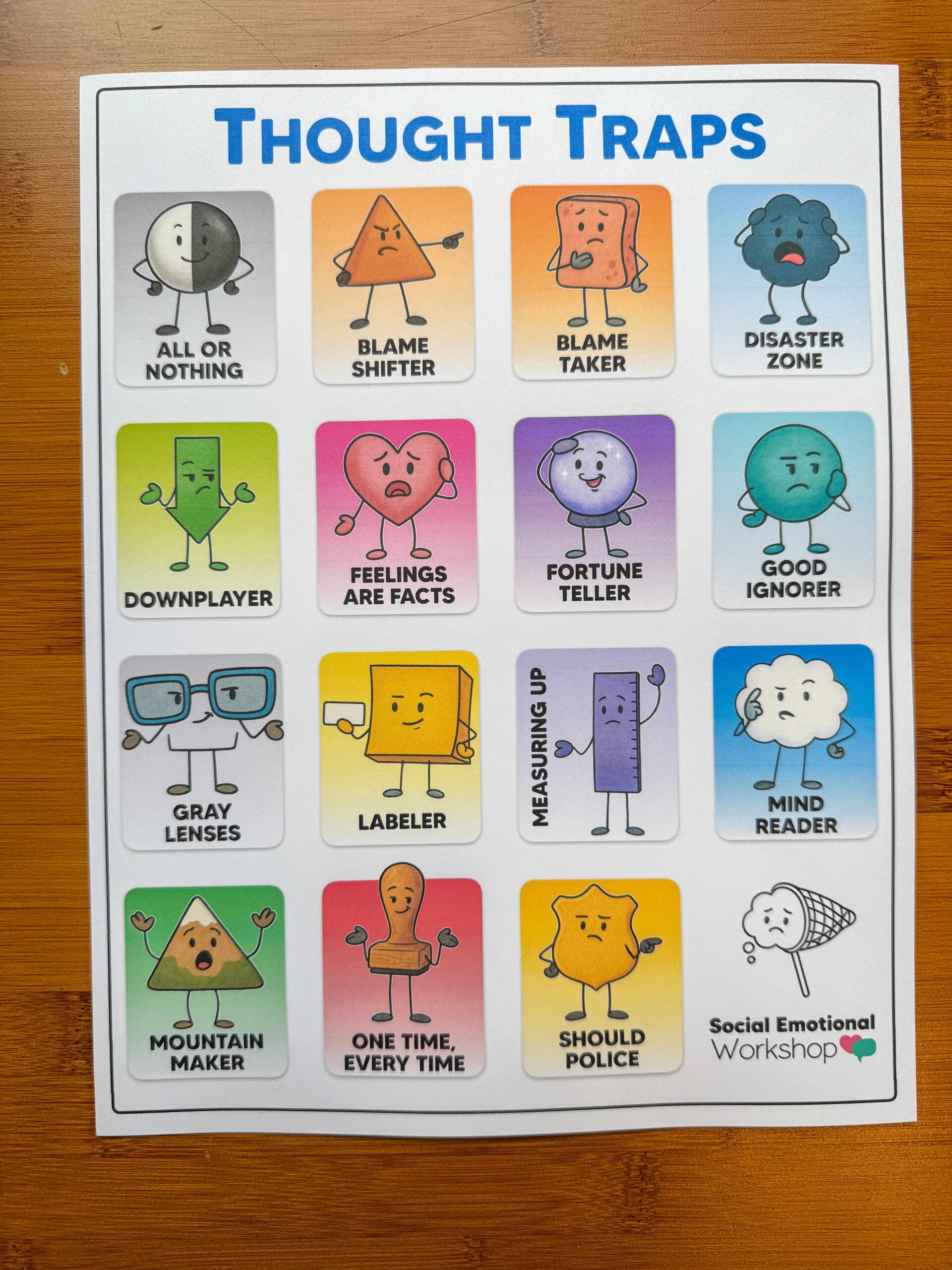
First, students learn what a thought is, the kinds of negative thoughts (cognitive distortions), and how to spot them.
Second, they learn ways to challenge negative thoughts to make sure they are based on facts. Last, they practice changing them with more realistic, positive thoughts.
We take each of these skills one at a time and then chain them together. This lets them get better and more confident with each step. For more detail, check out this post on challenging negative thinking.
Show How Thinking Affects Them
One of the first things I do in this type of work with students is help the kiddos understand the connection among their thoughts, feelings, and actions. Once they believe that their thoughts affect them, they’re more interested in changing their thoughts!
We go through several stories together and talk about how different characters think, feel, and act in the same scenario. Then I want to get their minds thinking about different thoughts by showing them tons of examples, sorting them between helpful vs. unhelpful, and then identifying which helpful thoughts they want to have more often.
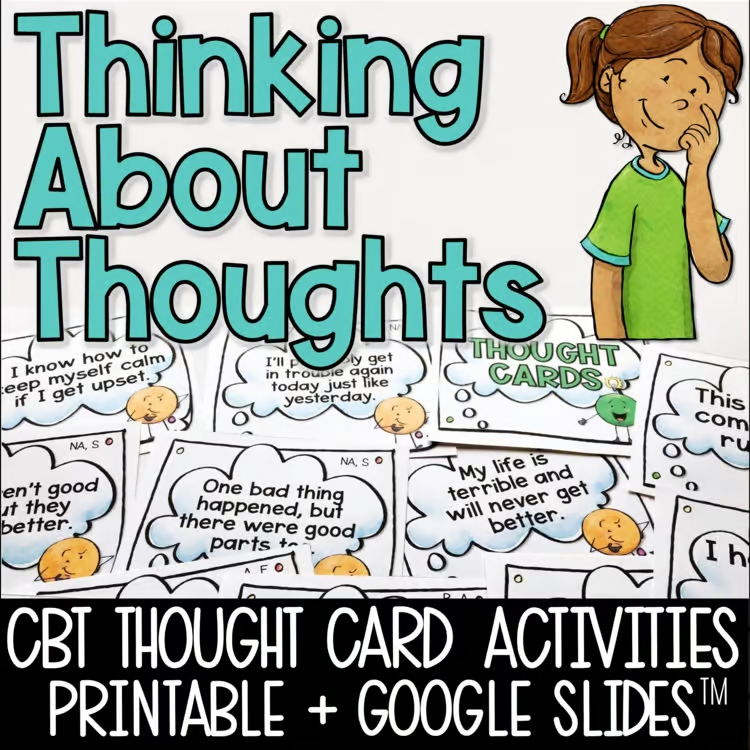
School Focus on Growth Mindset
At my school, we have spent the past few years focusing on what it means to have a “growth mindset.” By teaching students that we can learn from our mistakes, we can begin to increase positive thinking. My staff has worked hard to incorporate a growth mindset through hands-on experiences with students. We have also worked on integrating a growth-mindset focus into children's literature in the classroom. Check out some of my favorite growth mindset resources and activities in this post on my blog.

How do you make positive thinking a habit for students?
Share your tips below!